Across the UAE, parking infrastructure is undergoing a quiet transformation.
What was once considered a convenience feature is increasingly being treated as an essential component of urban planning, commercial property development, and facility management. As vehicle ownership continues to rise and temperatures remain among the highest in the world, the demand for professionally designed car parking shade solutions has moved beyond aesthetics and into the realm of asset protection, sustainability, and user experience.
The growing importance of car parking shades in UAE is closely linked to broader economic and infrastructure trends. Dubai’s Roads and Transport Authority (RTA) recently reported that the number of vehicles on Dubai roads during daytime hours has reached approximately 3.5 million. At the same time, registered vehicles in the emirate increased by 10% over a two-year period, significantly higher than the global average growth rate of 2% to 4%. These figures reflect a city that continues to expand rapidly while accommodating increasing mobility demands.
For developers, consultants, facility managers, hospitals, schools, industrial operators, and government entities, the implications are clear. More vehicles require more parking. More parking requires smarter infrastructure.
Vehicle Growth Is Reshaping Parking Requirements
The UAE’s transportation ecosystem continues to evolve at a remarkable pace.
Dubai alone now manages millions of vehicle movements daily. According to RTA statistics, approximately 3.5 million vehicles use Dubai’s roads during daytime hours. This level of traffic volume places increasing pressure on residential communities, commercial districts, logistics hubs, educational institutions, and healthcare facilities.
Commercial transportation is growing even faster. RTA data shows that newly registered commercial vehicles increased by 43% in 2024 compared to the previous year. This surge reflects growth across logistics, construction, transportation, delivery services, and industrial operations.
Every additional vehicle requires parking capacity. Every parking space exposed to extreme Gulf temperatures creates new challenges related to user comfort, vehicle protection, maintenance costs, and operational efficiency.
As a result, parking shade infrastructure is becoming a strategic consideration rather than an optional upgrade.
Why Shade Matters in Gulf Climate Conditions
The UAE’s climate creates unique infrastructure requirements.
Summer temperatures regularly exceed 40°C, while parked vehicles may experience interior temperatures significantly higher than ambient conditions. Prolonged exposure to direct sunlight can affect paint quality, interior materials, electronic components, and occupant comfort.
For commercial fleets, the issue extends beyond convenience.
Companies operating delivery vehicles, logistics fleets, construction vehicles, service vans, and transportation assets often invest heavily in fleet maintenance and lifecycle management. Protecting those assets through effective parking shade systems can contribute to reduced wear and improved operational readiness.
Hospitals, universities, government offices, shopping centres, and business parks face similar considerations. Visitors and employees increasingly expect shaded parking as part of the overall facility experience.
This shift has elevated the role of the modern car parking shade from a simple structure to an infrastructure asset.
The Expanding Role of Car Parking Shade Systems
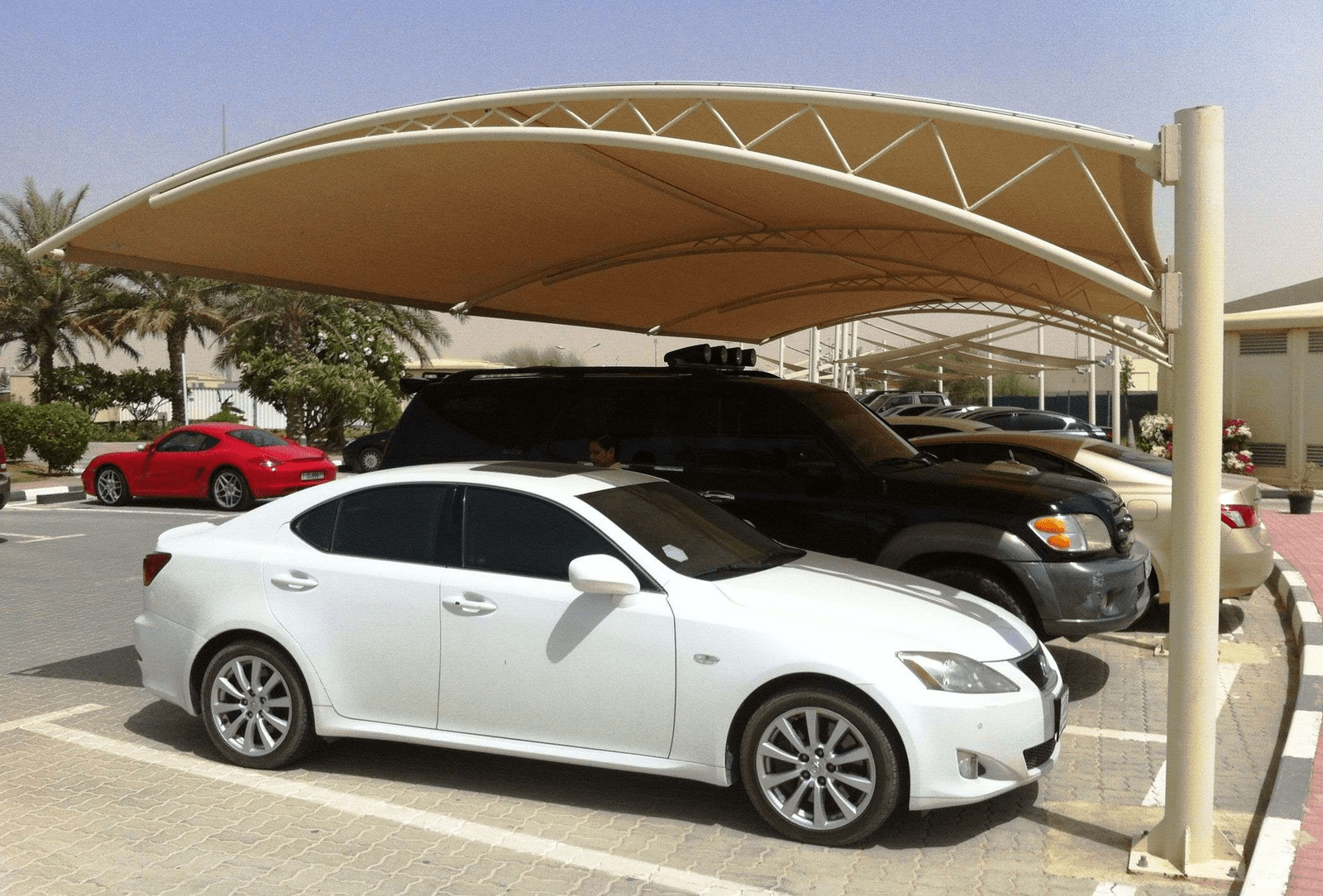
Today’s parking shade solutions serve a wide range of applications.
In residential communities, they provide protection for privately owned vehicles while improving neighbourhood aesthetics. In commercial developments, they enhance user experience and contribute to property value.
In industrial environments, they support operational efficiency by protecting vehicles, machinery, and equipment from prolonged sun exposure.
Common applications include:
- Business parks
- Government facilities
- Educational institutions
- Hospitals and healthcare centres
- Shopping malls
- Hotels and resorts
- Construction labour accommodations
- Industrial yards
- Logistics facilities
- Residential communities
As urban development expands across Dubai, Abu Dhabi, Sharjah, Ajman, and other emirates, demand for scalable parking infrastructure continues to increase.
Car Parking Shades and Urban Planning
Recent regulatory developments highlight the growing importance of parking shade infrastructure.
In 2026, Dubai’s RTA introduced a dedicated permit service for residential parking shades. The initiative was designed to improve safety, preserve urban aesthetics, and respond to resident concerns regarding increasing temperatures and vehicle growth.
The introduction of a dedicated permitting framework demonstrates that parking shade installations are no longer viewed as informal additions. Instead, they are becoming integrated components of urban planning and public infrastructure management.
For developers and consultants, this trend reinforces the need to consider parking shade requirements during the planning phase rather than as a post-construction modification.
What Developers Should Consider
Not all parking shade systems are equal.
When evaluating parking infrastructure, developers should consider several factors beyond initial installation cost.
Structural Performance
The Gulf environment places significant stress on outdoor structures. Wind resistance, corrosion protection, and material durability should be assessed carefully.
UV Protection
Effective shade systems are designed to reduce direct solar exposure while maintaining airflow and ventilation.
Maintenance Requirements
Long-term operational costs often depend on material quality, structural design, and maintenance accessibility.
Architectural Integration
Modern developments increasingly require shade structures that complement overall architectural design rather than appearing as standalone additions.
Compliance and Approvals
Projects should align with local authority requirements and applicable municipal regulations.
Sustainability Considerations
Sustainability has become a central objective across the UAE’s development landscape.
Parking shade systems can support sustainability goals in several ways.
By reducing heat accumulation around parked vehicles, shaded areas can contribute to improved thermal comfort within surrounding environments. Certain shade structures can also be integrated with solar energy systems, creating opportunities for renewable energy generation within commercial developments.
As the UAE continues investing in sustainable urban development initiatives, multifunctional parking infrastructure is expected to play a growing role.
The Future of Parking Infrastructure in the UAE
Several trends are likely to shape the future of parking shade systems.
First, vehicle ownership remains high across major urban centres.
Second, commercial transportation activity continues to expand alongside economic growth.
Third, urban planners are placing greater emphasis on user experience, sustainability, and environmental performance.
Finally, electric vehicle adoption is increasing, creating new opportunities for integrated shade and charging infrastructure.
Taken together, these factors suggest that parking shade systems will become increasingly important within both public and private sector developments.
Key Takeaway
The conversation around parking infrastructure in the UAE is changing.
As vehicle numbers rise, urban density increases, and climate resilience becomes a greater priority, parking shade solutions are evolving from optional amenities into essential infrastructure assets.
For developers, consultants, facility managers, and government stakeholders, investing in high-quality parking shade systems is no longer simply about protecting vehicles. It is about supporting user comfort, improving operational performance, enhancing property value, and aligning with the future needs of modern urban environments.
FAQ
Which sectors use parking shade systems most frequently?
Healthcare, education, government facilities, logistics, construction, hospitality, retail, and residential communities are among the largest users.
Do parking shades contribute to sustainability goals?
They can. Some systems reduce heat buildup and can be integrated with solar technologies to support renewable energy generation.
Why are developers investing more in shaded parking?
Developers recognize the benefits of vehicle protection, improved visitor experience, enhanced property value, and compliance with evolving infrastructure expectations.
Are parking shade regulations changing in Dubai?
Yes. Dubai’s RTA introduced a dedicated permit system for residential parking shades, highlighting the growing importance of properly planned installations.